
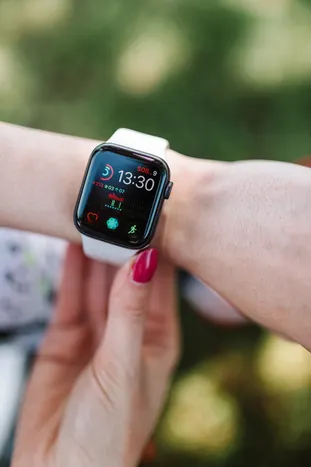
Millions of people now check their heart rate, sleep score, and blood oxygen level from a device on their wrist before they even get out of bed. Understanding what these numbers actually measure, and their real limitations, helps you use wearable health data sensibly rather than either dismissing or over-trusting it.
Quick Answer
Wearable health trackers use optical sensors, known as photoplethysmography (PPG), which shine light into the skin to detect blood volume changes and estimate heart rate. More advanced devices add ECG sensors for electrical heart activity, along with accelerometers for movement and additional sensors for blood oxygen and skin temperature. These devices are reasonably accurate for general trends and everyday monitoring, but they are consumer wellness tools, not medical-grade diagnostic equipment, and should not replace professional evaluation.
How Optical Heart Rate Sensing Actually Works
Most wearables measure heart rate using PPG sensors, which shine light, typically green or infrared LEDs, into the skin. Blood absorbs some of this light, and the amount reflected back changes as blood volume in the vessels rises and falls with each heartbeat. The tracker’s photodetector measures these fluctuations and converts them into a heart rate reading, all without ever needing a direct electrical connection to the heart.
What Other Sensors Actually Measure
- Accelerometers. Detect movement and orientation, forming the basis for step counting, activity recognition, and sleep stage estimation.
- ECG sensors. Found in more advanced smartwatches, these measure the heart’s actual electrical activity and can flag patterns suggestive of irregular rhythms, such as atrial fibrillation.
- Pulse oximetry sensors. Estimate blood oxygen saturation using similar light-based principles to heart rate sensing, though generally less precise than clinical pulse oximeters.
- Skin temperature sensors. Track relative changes in skin temperature over time, useful for spotting trends rather than providing an absolute clinical temperature reading.
How Accurate Are These Devices Really?
Research comparing wearable heart rate sensors against clinical-grade chest strap monitors generally shows good accuracy during rest and moderate activity, with intraclass correlations in the range of 0.75 to 0.95 in published validation studies. Accuracy tends to decrease during high-intensity exercise, and factors such as loose-fitting straps, wrist movement, skin tone, and even tattoos can all reduce reading reliability.
What AI Adds to Modern Wearables
Newer wearables increasingly apply machine learning to raw sensor data, identifying patterns across heart rate variability, sleep stages, and activity levels that would be difficult to interpret from raw numbers alone. This is what powers features like readiness scores, irregular rhythm notifications, and personalised activity recommendations. See our guide on advanced artificial intelligence concepts explained for how the underlying machine learning techniques behind these features actually work.
Consumer Wellness Tool vs Medical Device
Most wearable trackers are classified and marketed as consumer wellness devices, not regulated medical diagnostic equipment, even when they include features like ECG or irregular rhythm notifications. This distinction matters: they can support awareness and prompt a timely conversation with a doctor, but an abnormal reading should always be confirmed through proper clinical evaluation rather than treated as a diagnosis.
Genuine Benefits Backed by Research
Beyond raw accuracy, research published in JMIR mHealth and uHealth has found that wearable activity trackers are associated with genuine increases in physical activity over the short to medium term, with users moving more and sitting less. Even modest activity gains have been linked to better blood pressure, blood sugar control, and cardiovascular health in supporting research.
Getting the Most Reliable Data From Your Device
- Wear the device snugly but comfortably, since a loose fit reduces optical sensor accuracy
- Understand that readings during intense exercise are generally less reliable than resting or steady-state readings
- Treat single abnormal readings as a prompt to monitor further, not an automatic diagnosis
- Share trends over time with a healthcare provider rather than isolated data points
Frequently Asked Questions
How do fitness trackers measure heart rate without touching an artery?
They use optical PPG sensors that shine light into the skin and measure how blood volume changes reflect that light, converting the pattern into a heart rate reading.
Are wearable heart rate monitors medically accurate?
They are reasonably accurate for everyday trends and moderate activity, but are classified as consumer wellness tools rather than medical diagnostic devices.
Can a smartwatch detect a heart condition?
Some devices can flag patterns suggestive of irregular rhythms, but any such alert should be confirmed through proper medical evaluation, not treated as a diagnosis.
Why does my wearable give different readings during intense exercise?
Motion and looser skin contact during vigorous movement reduce optical sensor accuracy, which is a well-documented limitation of this technology.
Do wearable trackers actually improve health outcomes?
Research has associated their use with genuine increases in physical activity, which is linked to better cardiovascular and metabolic health over time.
Related Reading
This article is for general information only and is not a substitute for professional medical advice. Always consult a qualified healthcare provider regarding any health concerns or unusual readings.