
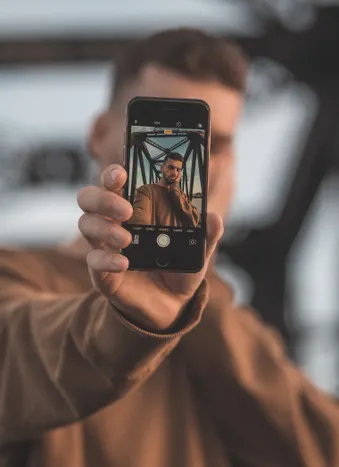
AI selfie and photo apps have become hugely popular, transforming ordinary photos into stylised portraits, cartoon versions, or entirely new artistic renderings within seconds. Understanding the technology behind them explains both what they do well and where their real limitations lie.
Quick Answer
AI selfie and photo apps use generative AI models, most commonly diffusion models, trained on millions of images to transform a photo’s style while preserving key facial features. The app analyses your uploaded photo, then generates new images that blend your features with the artistic style you selected, based on patterns the underlying model learned during training.
How These Apps Actually Work
Most modern AI photo apps rely on a type of generative AI model called a diffusion model. During training, these models learn by gradually adding noise to millions of images and then learning to reverse that process, effectively learning how images are structured at a very deep level. When you upload a selfie, the app uses this learned knowledge to generate a new image that maintains recognisable features from your photo while applying the chosen artistic style.
Why Results Can Vary So Much
- Photo quality and angle. Clear, well-lit, front-facing photos generally produce more accurate results than blurry or heavily angled images.
- Training data bias. Since these models learn from large training datasets, results can be less accurate for faces, features, or styles that were underrepresented during training.
- Style complexity. Simple stylistic filters tend to produce more consistent results than highly complex or unusual artistic transformations.
- Model version. Different apps use different underlying models, some considerably more advanced than others, which explains why the same photo can produce very different quality results across apps.
Common Types of AI Photo Transformations
- Artistic style transfer. Reimagining a photo in the style of a particular art movement or aesthetic.
- Avatar and cartoon generation. Converting a realistic photo into a stylised, illustrated version.
- Age and appearance transformation. Generating plausible variations showing different ages or styling.
- Background and scene replacement. Placing the subject into an entirely different generated environment.
Privacy Considerations
Uploading your photo to an AI app typically means that image is processed on the company’s servers, and privacy policies vary significantly on what happens to that data afterward, including whether it may be used for further model training. Reviewing an app’s privacy policy before uploading personal photos, particularly images of children or other people who have not consented, is a sensible precaution rather than an overreaction.
What These Apps Cannot Do Reliably
Despite impressive results, these models can still produce inconsistent details, particularly around hands, teeth, and complex backgrounds, since these features are harder for the model to learn accurately from training data. Results also cannot be considered a fully accurate representation of a real person, since the underlying process generates a plausible new image rather than simply editing the original photo.
The Underlying Technology in Context
AI photo apps are a practical, everyday example of the generative AI concepts increasingly common across many industries. See our guide on advanced artificial intelligence concepts explained for a deeper look at how diffusion models and generative AI actually function under the hood.
Frequently Asked Questions
What technology do AI selfie apps use?
Most rely on diffusion models, a type of generative AI trained on large image datasets to transform photos while preserving recognisable features.
Why do AI photo results sometimes look distorted?
Complex details like hands and backgrounds are harder for these models to learn accurately, which is why they sometimes appear inconsistent or distorted.
Is it safe to upload personal photos to AI apps?
Check the app’s privacy policy first, since data handling practices vary significantly between providers.
Do AI photo apps create an exact copy of my face?
No. They generate a new image that blends recognisable features from your photo with the learned patterns of the chosen style, rather than directly editing the original.
Why do different apps produce different quality results from the same photo?
Each app uses a different underlying AI model, trained on different data and to different levels of sophistication, which affects output quality significantly.
Related Reading
- Advanced Artificial Intelligence Concepts Explained
- Artificial Intelligence Workshops: What to Expect
- Oman’s Artificial Intelligence Strategy Explained
For guidance on AI and personal data handling referenced in this article, see the ICO guidance on AI and data protection.